Best White-Label Auction Software in 2026

best white-label auction software in 2026
Table Of Contents:
Categories:

When auctions went online, third-party marketplaces offered a quick and easy way to scale. But as the market matured, operators began weighing the cost of that convenience. Now they are asking uncomfortable questions: Who actually owns the bidder relationship? Where is the margin going? And shouldn’t we control our own brand?

Those questions point toward white-label auction software. This type of platform lets you run branded auctions under your own name, without routing traffic and revenue through third-party marketplaces.

Below, we compare the top white-label auction software providers and where each one fits, so you can match a platform to the way your business runs auctions. But first, let’s look at what white-label software is and the features worth checking before you compare vendors.

See How a White-Label Auction Platform Works in Practice

Geomotiv built a branded reverse-bidding platform to automate healthcare staffing operations without dependence on third-party marketplaces.

Read the case study

What Is White-Label Auction Software?

White-label auction software is a ready-made (or custom-built) auction platform that you brand and operate as your own. Bidders see your logo, land on your domain, and move through an interface in your colors. To them, the platform is part of your business, even though the underlying technology comes from a vendor.

Instead of building auction technology from scratch, you license or acquire a white-label platform that already handles the core mechanics: bidder registration, lot management, real-time bidding, payment processing, and reporting. You add your brand on top, configure it for specific auction formats, and go live under your own name.

The white-label setup matters most when brand equity is part of your business model. An auction house that has spent years building trust with luxury item buyers and sellers has good reason not to redirect that audience to a third-party platform. The same applies to non-profits running charity events, commercial operators running property or equipment auctions, and industrial liquidators who compete on reputation as much as surplus inventory. As a result, white-label auction software supports brand growth on ready-made infrastructure for these operators.

But the feature set varies from vendor to vendor, and the differences decide whether a platform fits your formats, volume, and buyers.

Key Features to Evaluate

Before comparing providers, it helps to understand what separates standard platform features from enterprise-ready ones:

  • Brand control. This goes beyond swapping in your company’s logo. The best white-label online auction platforms run on your own domain, let you publish a mobile app to the App Store and Google Play under your company name, and keep vendor branding out of the emails, URLs, and notifications bidders see.
  • Auction format flexibility. Most operators require more than one auction format. Timed online auctions, live webcast auctions, hybrid events that run in-person and online simultaneously, and buy-now sales match different buyer behaviors. A white-label platform needs to support multiple formats without juggling separate tools.
  • Bidder data ownership. On third-party platforms, your bidder data belongs to someone else. Auction marketplaces use it for remarketing, cross-promotion, and fee extraction. White-label auction software should let you export that data, sync it to your CRM, and restrict competitor access through account-level permissions.
  • Mobile bidding. A growing share of bidders join auctions from mobile devices. To reach them, most vendors provide a responsive web interface. A native mobile app under your brand name goes further and suits operators who run frequent events or handle heavy bid traffic.
  • Integration capabilities. Auction software needs to connect with payment processors, CRM systems, inventory management tools, and reporting platforms. Look for a platform that offers APIs and pre-built integrations, so custom development stays limited at launch and as you scale.
  • Scalability and uptime. A live auction that drops mid-event loses active bids and can cost you buyer trust. Enterprise-grade white-label auction platforms offer uptime SLAs, high-load infrastructure, and load balancing that absorbs traffic spikes during closing windows.

You won’t need every capability on this list. For instance, an operator running a single reverse-auction model can skip broad format support but still depend on integrations and uptime requirements. The stronger vendors let you switch features on or off to fit your business model. The providers reviewed next are the ones worth a close look in 2026.

Best White-Label Auction Software Providers in 2026

1. Geomotiv

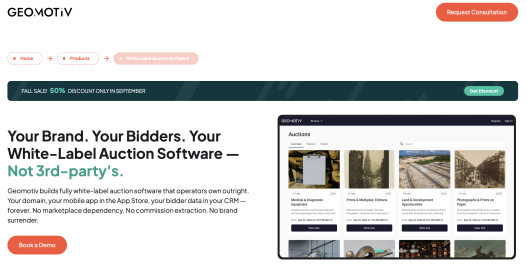
white-label auction software_Geomotiv page

Geomotiv provides custom white-label auction platforms for operators who want to own the software rather than license it from a vendor. The auction runs on a domain you choose, and bidder data lands in your CRM, out of any third-party marketplace.

Highlights

  • Timed online, live webcast, in-person simulcast, and hybrid auction formats.
  • iOS and Android apps published under your company name.
  • Your choice of payment processor, such as Stripe or Fiserv.
  • Custom CRM integration and branded notifications.
  • 99.9% uptime SLA.

Core strengths

Operators on marketplace-dependent platforms pay per-transaction fees or commission percentages that grow with bidding volume. They also expose their buyer base to competitor listings and remarketing. Geomotiv’s white-label model addresses both limitations directly:

  • You pay a flat enterprise fee of $15K instead of a percentage on every sale, so your cost stays the same as bidding volume grows;
  • You own the platform, so the buyer base belongs to you. Bidder registrations, bid histories, and contact details feed your own marketing, repeat sales, and audience analysis.
AspectThird-party marketplaceGeomotiv’s White-Label Software
Pricing% from every saleFlat enterprise fee from $15K
Bidder dataHeld by marketplaceYours, in your CRM
DomainPage on vendor's siteYour own domain
Mobile appUnder vendor’s nameUnder your company’s name
OwnershipVendor keeps the platformYours at delivery
Marketplace vs. Geomotiv

For businesses evaluating the broader spectrum of auction and bidding platform development, Geomotiv brings expertise in RTB programmatic auctions.

Want to see how Geomotiv’s white-label platform works?

Book a walkthrough with Geomotiv’s team and see the branding, formats, and integrations in action.

2. Webtron

webtron screen_white-label auction software

Webtron integrates its white-label software into an auction house’s existing website, so sales run under that brand rather than on a shared marketplace portal. Operating since 2007, the company serves independent auction houses moving online without building auction technology from scratch.

Highlights

  • Online and live webcast auction formats.
  • No hardware to install and no per-listing fees.
  • AI lot cataloging, auto-translation across 104 languages.
  • Built-in bidder verification.
  • 24/7 chatbot and Xero invoicing.

Core strengths

With Webtron, the operator isn’t left to run the platform without support. A dedicated account manager stays with each operator, and Webtron’s staff can step in to clerk live auctions during the event. That covers a gap for smaller houses that don’t have technical or auction-operations staff of their own.

3. Selling Lane

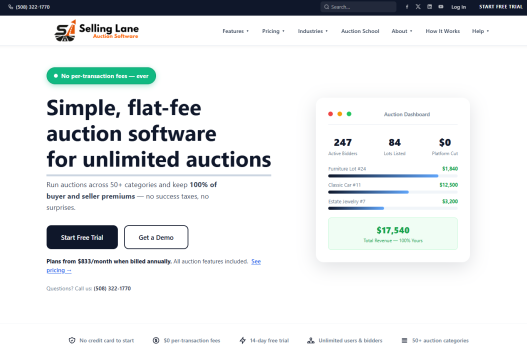
selling lane_white-label auction software

The platform focuses on auction operators who sell multi-category assets, including cars, farm equipment, livestock, jewelry, and storage units. It charges a flat monthly subscription fee, allowing businesses to keep their buyer and seller premiums.

Highlights

  • Open bid, proxy bidding, silent auctions, hybrid events, and simulcast streaming.
  • Real-time dashboards with built-in post-sales reporting.
  • Bidder verification and risk scoring.
  • No-code auction flyer creator.

Core strengths

Selling Lane applies white-label branding to the operator-facing parts of the platform. Your logo and colors run through the auction website, the outgoing emails, and the invoices the platform generates at auction close. Mobile bidders reach it as a Progressive Web App, so it loads in a browser and saves to the home screen without an app download.

4. Handbid

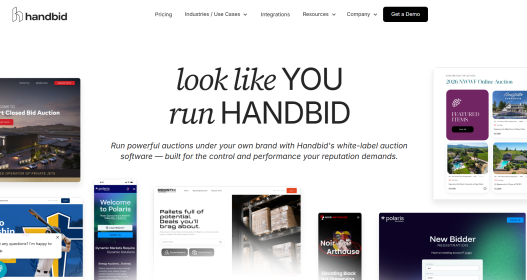
handbid screen_white-label auction software

Handbid started in event-based auctions such as galas and fundraisers, and has since extended its white-label platform to other formats. At the white-label tier, an operator can rebrand the experience down to the app name in the App Store and Google Play, as well as the colors, logos, and domain.

Highlights

  • Bidding through a native app, a mobile browser, or an iPad kiosk.
  • Branded emails from the operator’s name.
  • Inventory and reporting tools that track items, bids, and results.
  • Integrations with a CRM, ERP, or donor database.

Core strengths

Apart from non-profit fundraising, Handbid now also serves real estate, art and collectibles, industrial auctions, and private-market asset sales. The white-label option fits auction management companies that run branded events for multiple clients on shared infrastructure.

5. Gavel (Segistics)

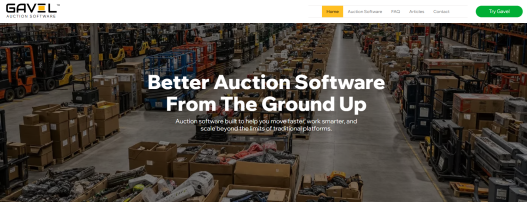
gavel screen_white-label auction software

Gavel handles online, in-person, hybrid, and marketplace auctions from a centralized platform that covers catalog, bidding, payments, and reporting.

Highlights

  • Real-time and overtime bidding.
  • AI-powered lot management and bulk lot builder.
  • Auction scheduling and sequential closing.
  • Custom invoicing, automated CSV import, and clerking.

Core strengths

Gavel’s AI builds and categorizes large batches of lots without manual entry, which suits liquidation and industrial sellers. For operators who serve third-party consignors, the white-label marketplace module adds multi-seller support.

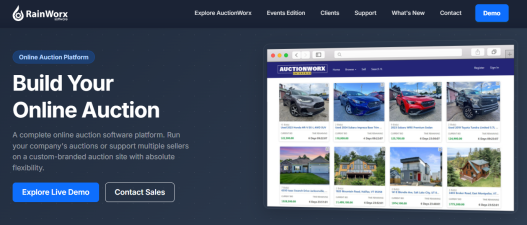
6. RainWorx (AuctionWorx)

rainworx screen_white-label auction software

AuctionWorx is licensed software that operators install on their own server and run as a white-label site under a custom domain. It handles both single-seller auctions and multi-seller marketplaces, where third parties post listings and the operator can charge fees.

The platform is available in two editions built around how lots close. The Enterprise edition suits marketplaces where individual listings end at different times. The Events edition runs scheduled timed sales, grouping lots into a catalog with organized closing times. The multi-seller and consignment tools are well-suited to operators serving the construction equipment, industrial surplus, and wholesale categories.

Highlights

  • Enterprise edition for a single seller or a marketplace of third-party sellers.
  • Events edition for scheduled timed sales.
  • Auto-extend bidding that keeps a lot open on last-moment bids.
  • Responsive design for bidding from preferred devices.
  • Lack of listing, auction, or commission fees for operators.

Core strengths

The software runs on the operator’s own server, under the operator’s own domain, on a one-time license rather than a subscription. That setup fits operators who want long-term control over the platform.

7. Bidsquare Cloud

Bidsquare Cloud screen_white-label auction software

Bidsquare Cloud is the white-label arm of Bidsquare, built to run branded auctions across a range of categories. The solution integrates with the operator’s existing website, supporting live, timed, and buy-now formats. Bidsquare’s design team handles the branded setup.

Highlights

  • Live bidding from mobile and desktop devices.
  • Timed auctions with an auto-extend feature.
  • Live audio and video streaming.
  • Buy-now events for fixed-price sales without bidding.

Core strengths

The platform combines the white-label storefront with two connected modules: an inventory system that tracks consignments through to payout, and an analytics tool that reports on top categories, active participants, and bidder behavior. These capabilities suit auction houses in premium categories, where managing sellers and interpreting sales data matter as much as the bidding itself.

8. Auction Experts

auction experts screen_white-label auction software

Auction Experts is a Netherlands-based vendor running online auctions since 1999. Its white-label auction setup covers a branded website, a bidding engine, native mobile apps, and a back-office auction manager. It also runs an authentication service for verifying high-value lots, which matters in categories where provenance affects the sale.

Highlights

  • Native mobile app for bidders.
  • Authentication service for verifying lots.
  • Built-in CMS and event system for running scheduled sales.
  • API for connecting external tools.

Core strengths

The platform serves a wide span of segments, from art, antiques, wine, and luxury goods to cars, industrial machinery, agriculture, and heavy vehicles. Its European presence makes it a practical option for operators in markets where larger white-label platforms have less presence.

How to Choose the Right White-Label Auction Platform

The right choice depends on your seller model, your pricing math, and how much of the platform you need to own. A few questions will help to narrow down white-label options:

  • Who lists the lots? If it’s only you, most white-label platforms cope with the task. When you bring in outside sellers, the demands can go up. You need to charge and track their fees, assign permissions, split payouts, and keep listings separate in reporting. Consignment adds another layer, since you’re selling on behalf of other asset owners. Check that the white-label platform of choice adapts to the model you run.
  • How does the pricing scale? A flat subscription costs the same whether you run one auction or fifty. A commission works the opposite way. You pay nothing until a lot sells, then give up a percentage of the sale. Past a certain volume, the commission costs more than a fixed fee. Compare both against projected sales, and you’ll see which one comes out cheaper for your business.
  • How far does the branding reach? Some platforms rebrand the website and domain; others extend this to a mobile app under your own name, keeping vendor branding out of emails and notifications. The more your brand carries the buyer relationship, the more that reach matters. Before you commit, ask a vendor about the depth of their white-label offering.
  • How much do you need to own? Data ownership is common across white-label platforms: the bidder list stays with you rather than a marketplace. Owning the hosting and the code is rarer. A self-hosted license lets you run the software on your own servers, and a custom deployment can hand over the codebase itself as an asset. Decide which layer your business needs before comparing vendors.

Conclusion

White-label software lets you run auctions under your own brand without renting ready-made or building from scratch. Bidder registration, lot management, bidding, and payments come as part of the vendor’s ready-made package.

You can pick a provider from the list above. Most of them give you a branded platform that they host and maintain for you; a smaller number let you run the auction software on your own infrastructure.

Geomotiv is in that second group. Our company delivers white-label auction software under a custom enterprise contract, so the domain, mobile app, bidder data, and platform code belong to you once you go live. If you’ve outgrown paying a marketplace to reach your own bidders and would rather own the platform than license it, that’s the model worth a closer look.

Launch Your Own Branded Auction Platform Without the Tradeoffs

Geomotiv delivers white-label auction software you own outright, without marketplace fees and vendor lock-in.

Book a consultation with Geomotiv

Need Help? We’ve Got You Covered!

What is the difference between white-label auction software and a custom-built platform?

White-label software is an existing product you license and brand, while a custom-built platform is developed to your specifications and delivered as an asset you own. A licensed product gets you to market faster because the software already exists. When you own the platform, you avoid ongoing dependence on a vendor’s roadmap and per-transaction fees that increase with bidding volume.

Do I own my bidder data with white-label auction software?

In most cases, the bidder list belongs to you, but the extent of that ownership varies by vendor. Some let you export the data and sync it to your CRM while it sits on their hosting. Others deploy the platform on your own premises. Check which level a vendor offers before you commit.

Can white-label auction software support both live and online auctions?

Most modern platforms do, but the quality varies. Some handle timed online auctions out of the box but have limited live-webcast tooling. Others are built for live events and treat online bidding as secondary. If you run both formats, test each one directly rather than assuming equal conditions.

Which verticals does custom white-label auction software cover?

The best white-label auction software covers a wide range, including real estate, vehicles, art, agriculture, liquidation, and equipment. Each vertical has its own lot structure, bidder verification rules, and auction closing mechanics, so the configuration must match. Geomotiv builds a setup for each vertical rather than adapting a single generic template.

Can I publish a branded mobile app for my auction platform?

Yes, if the provider supports it. With Geomotiv’s solution, the app is published in the App Store and Google Play under your company name, so bidders download your app rather than a shared auction tool. Some SaaS white-label solutions skip this and provide only a mobile-optimized web interface.

How long does it take to launch a white-label auction platform?

A SaaS solution can go live in days to a few weeks, depending on branding setup and configuration. An owned platform can match that pace, too. For example, with Geomotiv, a branded deployment goes live in two weeks. The timeline stretches when you need to add custom auction formats, support several verticals, or migrate a current bidder base.

What if I already have an auction platform but need to upgrade or migrate it?

You can move your data to a white-label auction software without pausing your current auctions. Geomotiv plans the migration under the enterprise contract, maintains your auction schedule during the switch, and assigns an onboarding manager to handle the process.

Recommended Reading

Let Us Contact You

Fill out the form below and we’ll get in touch within 24 hours

    contact us3
    Software development expertise and senior tech talent for AdTech and Streaming Media projects.