Best Real Estate Auction Software in 2026

best-real-estate-auction-software in 2026
Table Of Contents:
Categories:

Real estate auction software serves different business models. Brokers and property owners can list properties on established auction marketplaces. Auction companies can use white-label systems to run their own sales. Other systems focus on specific auction types, such as foreclosure or tax deed sales.

Businesses looking for a real estate auction platform have several options to consider. Let’s review the leading providers, but first recap what real estate auction software includes and the benefits it offers.

What Is Real Estate Auction Software?

Real estate auction software is a digital platform for selling properties through online auctions. It lets sellers list properties and set auction terms. Buyers can then compete through live, timed, or sealed bids instead of a fixed asking price.

The software replaces manual, paperwork-heavy tasks with online workflows. These tasks include bidder registration, deposit collection, bid tracking, notifications, and invoicing.

How does it work in practice?

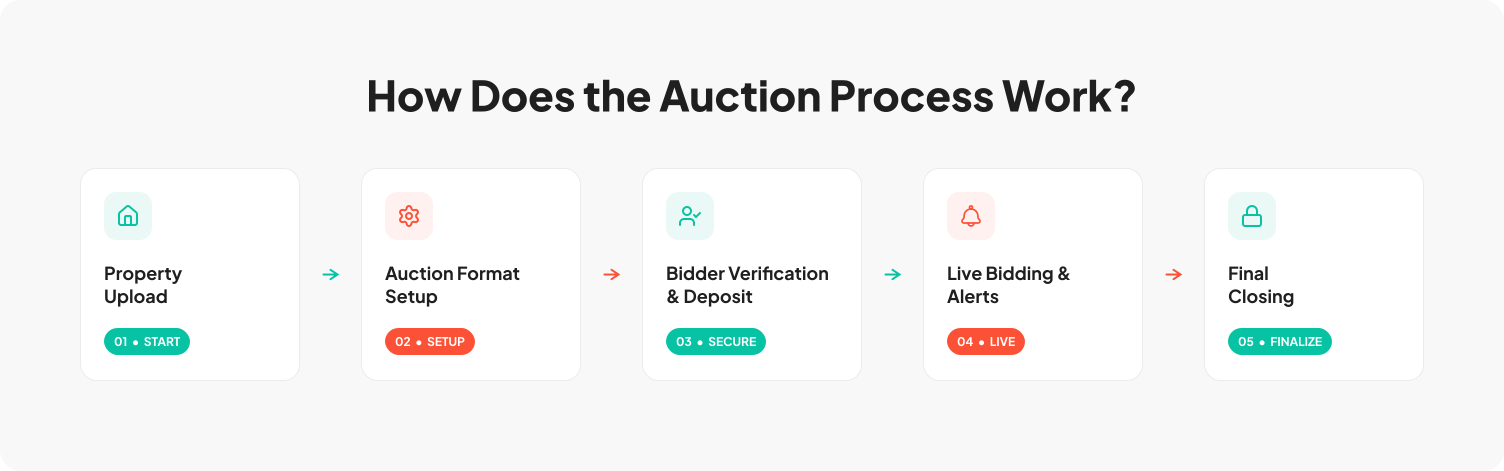
How Does the Auction Process Work_image

A seller or auctioneer uploads a property with photos, documents, and disclosures. Next, they configure the auction format, such as a live simulcast event, a timed online auction with a countdown, a sealed-bid sale, or a reserve auction with a hidden minimum price.

Buyers register and complete verification, often by submitting a refundable deposit. They can then place bids from a browser or mobile app. The software displays bid history in real time and sends outbid alerts. If bids arrive near the deadline, the platform automatically extends the auction clock. After the auction ends, the winning bidder completes payment, signs the required documents electronically, and proceeds with the closing process.

What benefits does auction technology bring?

  • Faster sales cycles. Online auctions can shorten the time between listing a property and completing the sale. Sellers can set a defined bidding period instead of waiting for offers through a traditional listing.
  • Wider buyer reach. Buyers can join the auction without traveling to a physical auction room. Sellers can therefore reach interested parties outside their local area.
  • Price transparency. Bidders compete during the auction, so the final price reflects demand among participants.
  • Lower overhead. The software can automate tasks such as invoicing, electronic signatures, and reporting, reducing manual work during and after an auction.
  • Compliance support. Purpose-built platforms include the disclosures, deposits, and audit trails that participants need for regulated auctions, such as government property and tax lien sales.

TOP 8 Providers of Real Estate Auction Software

Here is a shortlist worth evaluating if you’re comparing providers this year:

  • Geomotiv.
  • Bidhom.
  • Auctioneer Software.
  • Webtron.
  • AuctionMethod.
  • BidWrangler.
  • Auctions Live.
  • RealAuction.

Geomotiv

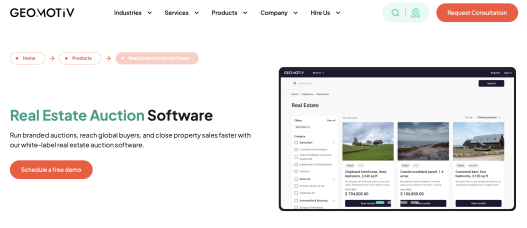
Geomotiv_real estate auction software

Overview

Geomotiv brings together expertise in auction technology and real estate software development. Since 2010, the company has been building custom auction platforms, including an auction marketplace that powered 1,000+ retail transactions in the first year. Its real estate portfolio includes a 3D mapping system for creating digital twins of physical properties and a PropTech project involving blockchain-based infrastructure.

Based on this experience, Geomotiv developed a white-label real estate auction platform. The software supports residential and commercial properties, land, distressed and foreclosed listings, and bank-owned buildings. Operators can run reserve, sealed-bid, and Dutch auctions through the solution. The white-label setup gives clients a branded auction platform customized to their requirements and ready to go live in two weeks.

Core Strengths

Operators can set up an auction catalog with virtual 3D tours, high-resolution images, and detailed descriptions. Buyers can browse available listings and filter them by property type or category. The platform also includes KYC/AML-aligned bidder verification and automated transfer-tax calculations.

Key Features

  • Scalable architecture to support high traffic volumes and simultaneous bidding;
  • Integrations with external systems;
  • Centralized auction dashboards with intuitive configuration;
  • Built-in marketing tools to increase event participation;
  • Analytics and reporting modules to track auction activity;
  • Languages and currency settings for local markets.
Start Selling Real Estate With a Ready-Made Auction Core

Explore Geomotiv’s white-label real estate auction platform and discuss the setup for your auction business.

Book a Demo

Bidhom

Bidhom_real estate auction software

Overview

Bidhom is a SaaS platform built for real estate agents, brokers, and auctioneers who want to add online bidding to their existing website. It integrates with real estate listings and includes a website builder, MLS/IDX integration, and e-signature support.

Core Strengths

Bidhom’s software includes features to boost buyer engagement, including automated outbid notifications and a unified bid history view. Auction operators can set up email campaigns and use SEO tools to promote their listings and attract more participants. The provider has also explored blockchain applications for auctions, which may be relevant to businesses considering this technology for property sales.

Key Features

  • No-code website builder with customizable templates;
  • Dynamic dashboard for auction management;
  • Real-time bid tracking tools;
  • Secure document storage with e-signature support;
  • Centralized listing management and property mapping.

Auctioneer Software

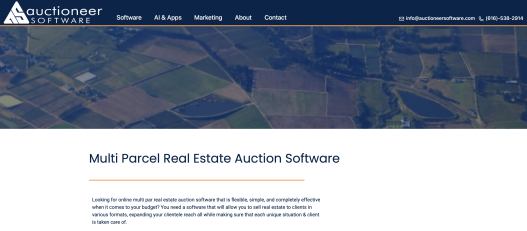
Auctioneer Software_real estate auction software

Overview

Auctioneer Software provides online, live/simulcast events, clerking, and multi-parcel real estate auction software. The platform is white-label, letting auction companies host auctions on their domain and develop their own bidder network without paying a commission on sales.

Core Strengths

Auctioneers can configure auction-level settings, register bidders during a live event, communicate with participants through a messaging system, and use YouTube for live streaming. Bidders can track individual parcels and parcel combinations during an auction, place bids online, and participate remotely in real time. The platform supports large and complex land auctions, with options to customize the bidding setup for different auction formats.

Key Features

  • Single-parcel and combination bidding;
  • Per-acre bidding options;
  • Real-time bidder messaging;
  • Live bidder registration;
  • YouTube Live streaming integration;
  • Configurable auction-level settings.

Webtron

Webtron_real estate auction software

Overview

Webtron delivers a mobile-friendly real estate auction platform that supports different formats for online property sales. Brokers and agents can run timed auctions or live webcast events with real-time video and audio for remote bidders. The provider has also used virtual reality for real estate auctions and was among the first to introduce this format online.

Core Strengths

Auctioneers can create property listings with photo galleries, video, floor plans, and brochures. They can apply their own branding elements and integrate the auction platform with an existing website. The platform can also combine standard bidding with Buy Now options, giving sellers diverse ways to offer available properties.

Key Features

  • Rotating property photo galleries;
  • Video walkthroughs and detailed floor plans;
  • Custom branding and white-label setup;
  • Buy Now purchasing options;
  • Virtual reality auction format.

AuctionMethod

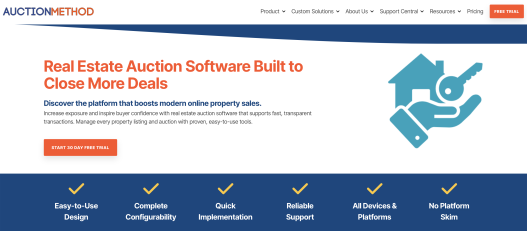
AuctionMethod_real estate auction software

Overview

AuctionMethod is an auction platform that delivers dedicated tools for running and managing property sales. Operators can use one solution to launch timed, simulcast, fixed-price, and sealed-bid auctions, as well as catalog-only events. The platform offers a flexible white-label interface, transparent pricing terms, and a 30-day free trial to test workflows before committing to a subscription.

Core Strengths

AuctionMethod brings bidder qualification, property documentation, and mobile cataloging into one real estate auction workflow. Sellers can pre-qualify bidders and use a whitelist to approve participants. Auctioneers can store contracts, disclosures, and media in one place with public or private access settings. The mobile cataloging app works offline and syncs once a connection becomes available, so auctioneers can catalog properties on-site.

Key Features

  • Bidder qualification and approval;
  • Document repository with access controls;
  • Timed, blind, and hybrid auctions;
  • Fixed-price and perpetual event formats;
  • Custom domain and branding controls;
  • Offline mobile cataloging;
  • Simulcast bidding for in-person and online participants.

BidWrangler

Bidwrangler_real estate auction software

Overview

BidWrangler is a white-label auction management platform for operators selling private and commercial properties. Its admin portal brings AI-assisted cataloging, bidding, invoicing, payments, and seller settlements into one place. Auctioneers can run timed or live auctions and adjust closing rules to match their sales format. They can also launch branded websites and mobile bidding apps.

Core Strengths

Before bidding begins, BidWrangler helps review prospective bidders and set the deposit requirements they must meet to participate. During timed auctions, the platform can extend bidding automatically and show backup bidders if the winner doesn’t complete the purchase. For farmland, commercial property, and development tracts, BidWrangler supports multi-parcel auctions and automatically calculates the highest-yielding bid combination.

Key Features

  • AI-powered catalog creation from property photos;
  • Manual and automated bidder approval;
  • Outbid push notifications and automatic bid extensions;
  • Multi-parcel bidding for land and development tracts;
  • Mobile apps for iOS and Android;
  • Live video streaming from mobile devices.

Auctions Live

Auctions Live_real estate auction software

Overview

Auctions Live is a digital auction platform developed by the Australia-based RE software team for real estate agencies, auction houses, and independent auctioneers. Agencies can host auctions and property campaigns on their own branded websites instead of a third-party portal. The platform combines auction management, bidder registration, and mobile tools for live events.

Core strengths

Property sellers can choose between in-room, on-site, timed, virtual, and stream-only auction formats depending on how they want to conduct a sale. They can use pre-built CRM and MLS connectors to bring listing and bidder records into the same workspace. For multi-lot sales, auction admins can create and manage multiple lots within one event.

Key Features

  • Mobile Console and Broadcaster app for auctioneers to run and stream auctions;
  • Drag-and-drop tools for branded auction presentations;
  • Multi-lot auctions built and managed in one place;
  • Customizable bidder registration forms;
  • CRM and MLS integrations;
  • Time-stamped bid and activity records.

RealAuction

RealAuction_real estate auction software

Overview

RealAuction is an online auction platform for government agencies that sell real estate through tax lien, tax deed, foreclosure, sheriff sales, and land auctions. Founded in 2004, the company specializes in public-sector property transactions that need to comply with applicable local laws and regulations.

Core Strengths

RealAuction is designed for municipalities, counties, and other government agencies rather than private real estate brokerages. The provider has separate products for the main public-sector property auction formats:

  • RealTaxLien manages tax lien and certificate sales;
  • RealForeclose focuses on foreclosure and sheriff sales;
  • RealTDA supports tax deed sales;
  • RealTDM adds tools for tax deed auction management.

The platform helps launch hosted auction sites and supports bidder registration, deposit collection, and online payments.

Key features

  • Tax lien, tax deed, foreclosure, and sheriff sale formats;
  • Hosted auction sites adapted to state-specific regulations;
  • Online bidder registration and deposit collection;
  • Secure payment gateways for completed sales;
  • Online training for bidders and clients.

Quick Overview of the Top Providers

ProviderBest suited forNotable strengths
GeomotivBranded real estate auctions on your own domainWhite-label setup, verification workflows, rich property catalogs
BidhomAdding auctions to an existing real estate listing websiteMLS/IDX integration, no-code website builder
Auctioneer SoftwareOnline, live, and multi-parcel real estate salesCombination bidding, per-acre bidding, live event tools
WebtronTimed and live webcast property auctionsWebcast events, rich property media, virtual reality auctions
AuctionMethodTimed, simulcast, and fixed-price property salesWhitelist bidders, offline mobile cataloging
BidWranglerPrivate, commercial, and multi-parcel property auctionsAI-assisted cataloging, automatic bid extensions
Auctions LiveIn-room, on-site, timed, and virtual property auctionsMobile auction and broadcasting apps, agency branding, multi-lot sales
RealAuctionGovernment property auctions and tax-related salesTax-sale and foreclosure software, state-specific workflows

How to Choose the Right Platform for Your Auctions

Before picking a platform, look at the auction formats it supports, the way it fits into your existing setup, and other requirements for your property listings:

  • Match the auction formats to your inventory. If you sell land or commercial property in tracts, look for multi-parcel bidding. For single-property sales, live webcast or simulcast formats may be more relevant than a basic timed auction.
  • Decide between white-label and marketplace. With a white-label platform, your company controls the auction brand and bidder data. A marketplace can bring buyer traffic, but sellers interact with a third-party brand.
  • Check whether the platform meets your legal requirements. Government and bank-owned property auctions may require specific rules for deposits, disclosures, and tax calculations. A general-purpose platform may not support these requirements without additional customization.
  • Review integration options. If your team already uses MLS/IDX feeds, a CRM, payment gateways, or e-signature tools, review how those systems connect to the chosen auction platform. Check whether it can exchange the relevant listing, bidder, payment, and document data with your systems.
  • Test performance under load. Auctions that draw a large number of bidders in the final minutes need a platform that can process bids without delays or dropped connections.
  • Consider whether you need a custom build. An off-the-shelf platform may suit standard auction workflows. However, you may outgrow its fixed feature set when your auction model, branding, or compliance requirements differ from what’s available.

Final Word

The real estate auction software providers above offer different starting points, from SaaS platforms for standard workflows to software built around specific auction types and public-sector requirements.

Geomotiv offers two approaches. Our white-label real estate auction software starts with a pre-built auction core and adapts it to each client’s needs under a custom contract. When the requirements call for a purpose-built system, Geomotiv develops the auction software from the ground up. In both cases, the client owns the software and the data it generates.

Launch Your Branded Real Estate Auctions with Geomotiv

Get a real estate auction platform tailored to your properties, compliance needs, and brand.

Need Help? We’ve Got You Covered!

How is a real estate auction different from a traditional listing sale?

A traditional sale relies on private negotiation around a listed property price. In an auction, interested buyers compete by placing bids openly. The seller sets a fixed bidding window and closes the real estate auction on a set schedule. The final amount reflects market demand rather than a price agreed through one-on-one negotiation.

What happens if no one meets the reserve price?

If bidding doesn’t reach the reserve price, the auction closes without a sale. Depending on the terms, the seller can relist the property, lower the reserve, or negotiate directly with the highest bidder.

Can a seller cancel an auction after bidding has started?

A seller can usually cancel or postpone an auction before it closes, although the platform may require a stated reason or charge a listing fee. Once the auction ends and a winning bid is confirmed, withdrawing the property may require a legal basis.

Recommended Reading

Let Us Contact You

Fill out the form below and we’ll get in touch within 24 hours

    contact us
    Software development expertise and senior tech talent for AdTech and Streaming Media projects.