Best Handbid Alternatives in 2026

Best Handbid Alternatives in 2026
Table Of Contents:
Categories:

Handbid is built around auction events, so nonprofits that also need ticketing, donor management, or memberships often compare other platforms. Handbid alternatives differ in the tools they include, the auction formats they support, and the setup they need.

Why Teams Start Looking Beyond Handbid

Teams may start looking for Handbid alternatives when event costs increase, admin tasks take too much time, or the software lacks the features they need. Handbid is nonprofit auction software that combines mobile auction bidding with fundraising features such as ticketing, donations, and event registration. However, its pricing model and operational requirements may not suit your way of running fundraising events.

Here are the main points to consider:

  • Subscription cost. Handbid uses quote-based pricing, so teams should request a proposal based on their event calendar.
  • Card fees. Handbid charges 3.5% + $0.30 rate per Visa, Mastercard, and Discover transaction, and 3.95% + $0.30 for American Express. For example, processing $50,000 in Visa payments costs $1,750 in percentage-based fees, plus $0.30 per transaction.
  • Setup effort. Small teams without a dedicated admin may need extra time to learn Handbid’s back office and prepare events. The platform requires organizers to configure auction settings, connect a Stripe account, add auction items, prepare guest lists, and set up ticketing and registration before any new event goes live.
  • Payment control. Organizations can connect their own Stripe account to receive payments directly. However, transactions already processed through Handbid’s payment system can’t be transferred to their accounts later.

Alternatives to Handbid solve these problems in different ways, so each point above becomes a test question for your shortlist.

What to Check Before You Switch Platforms

Check total cost, event formats, and data flow when you compare alternatives to Handbid software. Don’t focus on feature lists alone. A platform that wins on features can still lose on your per-event budget or on how it hands donor records to your CRM. Use these checks to assess your options:

  • Total cost. Calculate the annual subscription, any fees based on funds raised, and payment-processing charges against your expected revenue. Compare the total with Handbid’s quoted price.
  • Event formats. Confirm that silent, live, online, and hybrid auctions are supported if you use different formats throughout the year.
  • Guest experience. Test how easily guests can register, find auction items, and place bids from their phones with a weak internet connection. Outbid notifications should reach them while the auction is still open, and checkout should take only a few steps.
  • Data flow. Ask where bidder and donor records land after close and whether you can export them without developer help.
  • Event support. Confirm that phone or chat support is available during live auctions.

These five checks will help you assess how well each alternative fits your organization’s needs.

TOP 10 Handbid Alternatives Worth a Demo

Geomotiv

Auction and Fundraising Software_Geomotiv

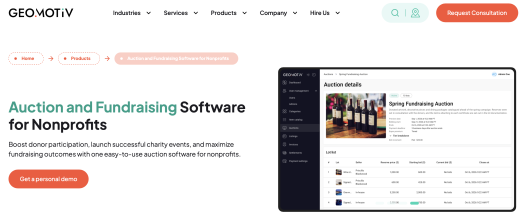
Geomotiv suits organizations that want a customized, branded auction platform. Its fundraising auction software supports silent, online, hybrid, timed, reverse, and fund-a-need formats.

Fundraising tools include SMS bidding, goal thermometers, donor leaderboards, self-service payments, and automatic receipts for donors and winning bidders. Organizations can add ticketing, donations, pledges, and sponsorship campaigns to their event workflows. Geomotiv has developed auction platforms for other business models as well. For a UK startup, the team built a trade auction platform for retailers.

  • The one-time white-label license starts at $15,000; The final price depends on the required customization, platform scale, and expected event volume.
  • Hybrid auctions let remote donors bid alongside guests at an in-room event.
  • Mobile bidding with SMS, automatic bid updates, outbid notifications, and 45+ configurable alert types.
  • Stripe Checkout supports one-click invoice payments. Buyers register a payment card before bidding, and fundraisers receive payouts to their bank accounts through Stripe Connect.
  • You own the bidder data and can connect the platform to its CRM and reporting systems. Open APIs support integrations with other third-party tools.
  • Dedicated onboarding and training, setup resources, and 24/7 support.
Launch your own fundraising platform in two weeks.

Own the Geomotiv’s platform and its source code instead of renting access to a third-party service or building every component from scratch.

OneCause

Onecause_Auction

OneCause fits nonprofits that want to manage auctions and fundraising events through one platform. Part of Bonterra, it offers charity auction software with silent and live bidding formats, ticketing, table management, sponsorship sales, donations, and fund-a-need appeals. Auction teams can run in-person, virtual, and hybrid events and increase engagement through real-time scoreboards. The platform’s Auction AI tools help generate item descriptions and recommend items based on supporter activity.

OneCause offers a subscription-based and Pay-As-You-Go model, charging a 5% fee on funds raised. The Professional plan costs $2,995 per year, while Enterprise and Nationals packages require custom quotes. These higher-tier plans also include API access, so that nonprofits can connect OneCause with their CRM and other systems.

GiveSmart

GiveSmart_Auction

Fundraisers may consider GiveSmart as an alternative to Handbid when they run silent auctions and want to make bidding accessible through mobile devices. Guests can browse searchable item catalogs, place bids from their phones, set maximum bids, and receive automatic text alerts when someone outbids them. Organizers can manage item procurement, descriptions, images, and packages through an auction dashboard. The platform supports event registration and check-in, live leaderboards, self-checkout, and payment processing.

GiveSmart offers annual subscriptions with no per-transaction charges at individually quoted prices. Additionally, it offers a Pay-As-You-Go plan. It has no upfront fees but costs depend on the volume of payments processed. GiveSmart sets the applicable transaction rate before signup. Both plans include access to the platform’s fundraising and event tools, unlimited campaigns, implementation support, and a dedicated client success manager.

BetterWorld

BetterWorld

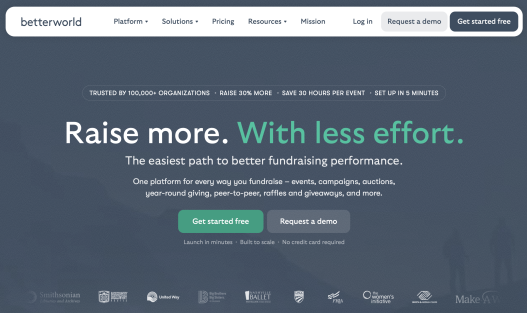
BetterWorld is the strongest pick when the budget is tight, and auctions are only one of several campaigns. Its Free plan has no platform fee and relies on optional donor contributions to support the service. Credit card processing costs 2.9% + $0.30 per transaction, which donors can cover at checkout. If they decline, the organization pays the processing fee. On $50,000 in card payments, the difference between BetterWorld’s 2.9% and Handbid’s 3.5% processing rate is $300.

The platform helps run silent and live auctions, as well as other fundraising activities such as donation campaigns, peer-to-peer fundraising, crowdfunding, paddle raises, and event ticketing. Nonprofits can run these campaigns through the same account and manage them alongside their auction events.

Zeffy

Zeffy_auction

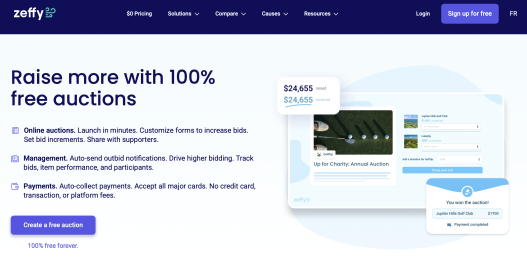
Zeffy offers a free fundraising suite with online auctions, ticketing, memberships, and donation pages in one tool. Auction organizers can:

  • add item photos and descriptions;
  • set starting prices and minimum bid increments;
  • customize forms with branded layouts;
  • specify pickup locations and fulfillment instructions for winning bidders;
  • manage donor records and expand their supporter base with a built-in CRM

Zeffy charges nonprofits no platform, transaction, or payment-processing fees. It funds its service through optional donor contributions at checkout. When someone pays for an auction item, ticket, or makes a donation, Zeffy asks whether they want to support its free fundraising tools. Donors can decline a voluntary contribution, and the nonprofit still receives the full payment. The model may confuse donors about who receives the contribution, so nonprofits should explain this checkout step to supporters.

Silent Auction Pro

Silent Auction Pro

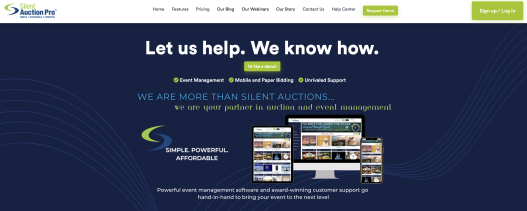
Silent Auction Pro fits small and mid-sized nonprofits that run campaigns year-round and prefer an annual license. It provides auction management tools rather than a broad fundraising suite like GiveSmart or Zeffy. Organizers can choose between paper-based and mobile bidding plans, depending on how they run their auctions.

Annual subscription prices start at $449 for paper-based auctions and $749 for virtual, in-person, and hybrid mobile bidding. All plans charge a 2% fee on the amount raised, but the fee won’t exceed $3,500 per event. Phone and email support is available seven days a week, from 9 a.m. to 8 p.m. Eastern.

Auctria

Auctria auction

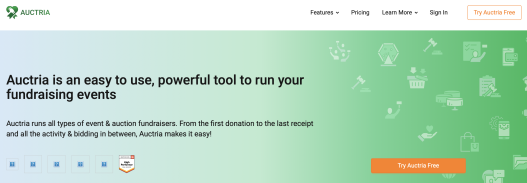
Auctria is a typical choice for schools, small nonprofits, and other organizations that need core auction tools on a limited budget. Its free Explorer plan has a $10,000 fundraising limit. The paid Emerald tier costs $375 annually for organizations raising up to $50,000, while Diamond costs $750 with no restrictions on annual fundraising volume. Auctria charges a percentage of card payments in addition to the annual plan price. The rate depends on the tier, starting at 1% for Explorer and dropping to 0.25% for Diamond. Payment processor fees apply separately.

The platform supports silent and live auctions, event ticket and sponsorship sales, donation collection, and paddle raises. Organizers can build a dedicated auction website, accept multiple currencies, and automate bidder registration and auction close-out. The website builder and registration tools, however, may take some time to get used to. Some users find the interface outdated.

ClickBid

ClickBid auction

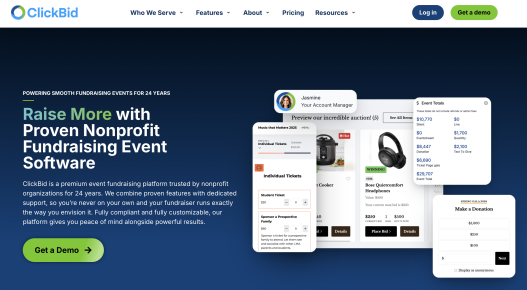
ClickBid suits nonprofits that run fundraising events with silent and live auctions, raffles, and paddle raises, similar to the mix offered by Handbid. The platform makes it easy to create branded event pages, display auction and fundraising activity in real time, and manage volunteers.

ClickBid offers two transparent annual subscription options. Its Essentials package costs $895 per year, while Full Suite comes at $1,495. Both support unlimited events and campaigns and require a 3.5% fee on credit card transactions. Full Suite adds online ticket sales, guest and table management, segmented email and text messaging, and live streaming solutions for hosting virtual and hybrid auctions.

Greater Giving

GreaterGiving auction

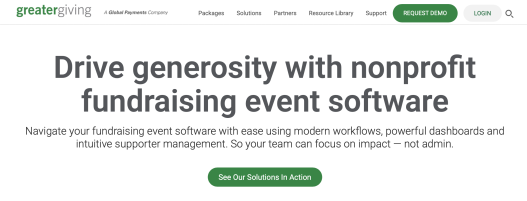
Greater Giving best fits in-person galas that require event management and auction tools within one platform. It supports online-only, live, and hybrid events, helping nonprofits manage guest registration, seating, sponsors, volunteers, and auction items. For silent auctions, the bidding add-on lets guests place bids from phones, tablets, or laptops, receive outbid alerts, and buy packages at fixed prices.

Greater Giving can exchange data with donor management systems such as Blackbaud Raiser’s Edge and eTapestry, with options to import supporter records and export event sales data. The company doesn’t publish fixed prices, so nonprofits need to request a quote.

BetterUnite

BetterUnite auction

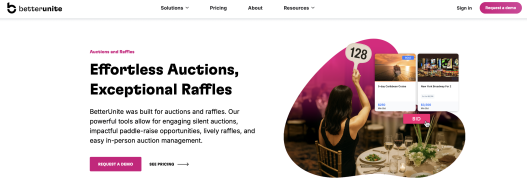
BetterUnite helps manage bidding, donor records, memberships, and volunteer programs in one software. Like Handbid, it supports silent, live, and hybrid auctions. Guests can bid from their phones through a personal link, without downloading an app or creating a password. They can set maximum bids, use automatic bidding, and receive SMS outbid alerts.

BetterUnite lists plans for events and auctions, CRM, and bundled services, with published starting prices from $65 per month on annual billing. The entry-level plan includes basic event and auction needs, while higher tiers offer tools such as advanced bidding logic, table management, custom reports, integrations, and dedicated account support. BetterUnite quotes prices for these higher tiers based on the selected plan.

Handbid Alternatives Compared at a Glance

The table below compares pricing, primary use cases, and factors to consider when choosing alternatives to Handbid.

PlatformBest forPricing signalWatch for
Handbid (reference)Auction-first fundraising eventsQuote-based; 3.5% + $0.30Per-transaction fees add to the event cost
GeomotivCustom branded platform with ownership of code and bidder dataWhite-label license from $15,000 (one-time) with no recurring costs or transaction chargesFinal price depends on customization and platform scope
OneCauseMulti-format fundraising eventsPay-As-You-Go at 5% of funds raised; annual subscriptions from $2,995/yearHigher-tier pricing plans require a custom quote
GiveSmartSilent auctionsAnnual subscriptions by quote; Pay-As-You-Go with a custom transaction ratePay-As-You-Go costs depend on payment volume
BetterWorldLow-cost multi-campaign fundraisingNo platform fee; 2.9% + $0.30 card processing chargesOrganizations pay processing fees if donors decline to cover them
ZeffyFree fundraising eventsNo platform fee; optional donor contributionsCheckout contribution prompts may confuse donors
Silent Auction ProSmall to mid-sized recurring eventsFrom $449/year (paper); mobile bidding from $749/year + 2%The 2% fee applies to each event, up to $3,500
AuctriaSmall nonprofits with limited budgetsFree tier; paid plans from $375 per yearLearning curve
ClickBidHybrid galasAnnual subscriptions starting from $895The 3.5% fee applies to credit card transactions
Greater GivingIn-person galasQuote-basedMobile bidding is an optional add-on that costs extra
BetterUniteNonprofits managing auctions and donor programsPlans from $65/month (annual billing)Platform fees vary by plan

Which Handbid Alternative Fits Your Events

Alternatives to Handbid differ in their features, pricing, and approach to auction management. The right choice depends on your event calendar and auction requirements. For instance, a once-a-year gala and a monthly online auction call for different tools.

Pick the line that best describes your needs to identify which platforms are worth a closer look:

  • I run multiple auction formats throughout the year. If you combine silent, live, online, and hybrid auctions, compare Geomotiv, OneCause, GiveSmart, and BetterUnite. As top alternatives to Handbid, they suit organizations with varied event programs.
  • My nonprofit events are recurring. Annual subscriptions from Silent Auction Pro, Auctria, and ClickBid may suit fundraisers that launch several events per year. For occasional campaigns, OneCause and GiveSmart offer Pay-As-You-Go options, while Zeffy and BetterWorld don’t charge platform fees.
  • I want to use specific bidding rules. If you need automatic bidding, anti-sniping extensions, or reverse auction logic, compare the supported functions in BetterUnite and Geomotiv. Geomotiv can also develop custom bidding rules for specific auction models.
  • I want auction and donor management in one system. BetterUnite combines auctions with built-in CRM and volunteer tools. GiveSmart and OneCause bring auction management together with event registration and other fundraising activities. Geomotiv’s platform can connect to your existing CRM through APIs.
  • I want to avoid ongoing platform and transaction fees. Geomotiv charges a one-time license starting at $15,000, with no subscription or platform transaction fees. Zeffy is also free to use because it relies on optional donor tips to fund their software.
  • I want my own auction platform. Geomotiv’s white-label solution runs under your branding and domain. You own the source code and bidder data and can customize the platform’s functionality to suit your requirements.

Conclusion

Once you’ve shortlisted a few alternatives to Handbid, arrange demos to check how each platform could fit into your day-to-day fundraising activities:

  • Test the bidder’s experience. Register as a participant, place a bid, check outbid alerts, and complete a payment;
  • Ask for a walkthrough of event management. Have the vendor show how staff add auction items, manage registrations, monitor bidding, and close an event;
  • Review integration options. Check whether the platform connects to your CRM, payment provider, and reporting tools, and ask whether any integration work requires extra development.
  • Discuss support during events. Find out who your team can contact if bidding or payments run into problems during a live auction.
Need auction software built around your events?

Geomotiv adapts white-label auction software to your fundraising workflows, CRM, and branding.

Book a personal demo

We Help Unlock Answers to Your Questions

Which Handbid alternative lets a nonprofit own its auction software?

Geomotiv is the best match among Handbid alternatives for nonprofits that want to run auctions on their own domain and branding. They own the source code and bidder data, can connect the platform to their existing CRM and reporting systems, and can request changes as their auction requirements evolve.

Can these platforms run hybrid auctions?

Yes. Geomotiv, OneCause, GiveSmart, Greater Giving, and ClickBid support hybrid auctions with in-room and remote guests bidding on the same items.

When does a custom auction platform make more sense than a subscription?

A custom or licensed platform is preferable when you run auctions year-round, want to use your own domain, or need specific integrations with internal systems. If that sounds like your setup, custom auction software development lets you design bidding rules and CRM connections around your process. You can also compare more options in our nonprofit auction software comparison.

Recommended Reading

Let Us Contact You

Fill out the form below and we’ll get in touch within 24 hours

    contact us2
    Software development expertise and senior tech talent for AdTech and Streaming Media projects.