How Video DSPs Power YouTube, In‑Stream, and In‑App Campaigns Across Multiple Exchanges

How Video DSPs Power YouTube, In‑Stream, and In‑App Campaigns Across Multiple Exchanges
Table Of Contents:

Video DSPs are invaluable tools for advertisers managing campaigns across multiple ad exchanges. They help deliver and optimize video impressions using a programmatic engine that can scale, target, and measure it precisely across channels.

This matters because video ads are one of the strongest formats for capturing audience attention. A well-placed video impression can build awareness, drive engagement, and influence purchase decisions. The DSP ensures those impressions appear in the right environments, reach the right users, and stay within the right budget.

Modern video DSPs make it possible to launch YouTube, in-stream, and in-app advertising simultaneously. Many campaigns run across multiple ad exchanges, making control and accuracy harder to maintain.

This article explains how video DSPs power that process. Let’s review how advertisers run targeted, optimized, and brand-safe video campaigns across multiple platforms through a single programmatic system.

What is a Video DSP and Programmatic Video Advertising?

The platform evaluates impressions in real time. It automatically checks targeting rules, audience data, and price signals before placing a bid for a video advertising impression. When the bid wins, the ad appears in the available video slot.

Not all DSPs handle video placements in the same way. While a standard DSP can buy display, native, video, or mobile inventory, a video DSP focuses on native video formats and offers tools for in-stream, in-app, and connected TV campaigns. This specialization gives advertisers more control over video-specific metrics, brand safety, and optimization.

FocusGeneral DSPVideo DSP
Ad formatsDisplay, native, mobileIn-stream, in-app, CTV/OTT video
Inventory scopeBroad, cross-formatVideo-focused, multi-exchange
Use case exampleBanner campaigns on websitesYouTube video campaigns

What is programmatic video advertising?

Both standard DSPs and video DSPs rely on programmatic systems. This is technology that automates the buying and delivery of ads. Managing video campaigns manually can be slow and error-prone, especially when targeting multiple audiences across YouTube, apps, and connected TV. Programmatic video advertising handles this automatically.

Instead of negotiating each placement, the system evaluates every available impression in real time and bids instantly. Ads appear before, during, or alongside content, while the DSP manages targeting, budgets, and ongoing performance optimization. This approach saves time, reduces errors, and allows campaigns to scale efficiently without affecting accuracy.

Build Your Custom Video DSP Today

Take full control of your video advertising stack and scale campaigns across premium publishers.

How a Video DSP Works

A video DSP lets you plan, buy, and optimize video campaigns across multiple publishers and ad exchanges from a single interface. Core functions you can expect a video DSP to have include:

  • Select formats. Choose between in-stream or out-stream ads, including pre-roll, mid-roll, and post-roll placements.
  • Set campaign metrics. Adjust metrics to follow, such as CPV (cost-per-view), CPM (cost-per-thousand impressions), or CPA (cost-per-action).
  • Apply targeting settings. Define preferences for audience/geo/device/context targeting.
  • Customize strategies. Set budgets, frequency caps, bidding rules, etc.
  • Add supply partners. Connect with SSPs and ad exchanges exposing video advertising inventory.
  • Track performance. Collect event-level signals such as start, quartiles, completion, clicks, and view-through rates for reporting and ongoing optimization.
  • Control brand safety. Set content category filters, domain/app blocklists, invalid-traffic detection, and suspicious supply flagging.

These capabilities form the technical foundation of any video DSP. The way you apply them, though, changes depending on the environment where ads run. That happens because video advertising inventory behaves differently across platforms. YouTube operates with its own buying mechanics, in-stream placements depend on publisher video players, and in-app inventory follows mobile and CTV app ecosystems.

The next sections look at how a video DSP adapts to each of these environments.

How Video DSPs Power YouTube Campaigns

YouTube inventory is only accessible through Google’s owned platforms, such as Google Ads and Display & Video 360. Running ads on this channel requires workarounds and careful coordination. But the good news is that a DSP gives all the tools to integrate YouTube into a broader video advertising strategy.

What do you need to succeed on the platform? Try following the specific approaches:

  • Treat YouTube as a dedicated channel in your overall plan. You won’t be able to access inventory directly. However, you can run YouTube campaigns in Google’s stack and use your video DSP to coordinate audiences, budgets, and reporting.
  • Enrich your DSP with first-party data signals. Enrich your DSP with first-party data signals and AI-powered lookalike modeling. Machine learning helps predict which YouTube videos will resonate with your target audience, so your ads appear where engagement is most likely to occur.
  • Optimize within platform limits. YouTube controls bidding strategies and brand-safety rules, so you cannot adjust bids or block placements at the same level of detail as open-web DSPs. However, you can structure campaigns into multiple line items by audience, funnel stage, and creative type.

By using these methods, your YouTube campaigns will succeed within your overall DSP strategy. The video DSP allows you to synchronize audiences, optimize bids, and measure results in a way that aligns with other channels.

See how we boosted YouTube campaign relevance with automation and ML.

Our team helped advertisers automate the analysis of YouTube video attributes and performance stats.

Explore the full case study

Video DSPs for In‑Stream Video on Open Web/CTV

In‑stream video campaigns on the open web or CTV come with unique challenges. Inventory is fragmented across multiple SSPs and publishers, ad quality varies, and viewers consume content in different contexts and on different devices. A video DSP solves these challenges by centralizing buying, targeting, and optimization in one platform. It evaluates each impression in real time, adjusting bids, targeting the right viewers, and keeping campaigns efficient while delivering measurable results.

The same video DSP capabilities also power in-stream retail media campaigns. Platforms like Amazon DSP and Walmart Connect put your video ads directly in front of shoppers at the moment they’re ready to buy. Your DSP will sync audiences, track performance, and feed insights back into your open web and CTV campaigns.

Here’s a quick overview of how a video DSP supports each channel:

ChannelThe role of a video DSP
Open webCentralizes buying, targeting, and optimization across fragmented inventory
CTVTracks performance and applies targeting across devices and viewing contexts
Retail mediaDelivers ads at point of purchase and links retail audiences

Running In-App Campaigns with a Video DSP

With a video-first demand-side platform, in-app campaigns become predictable and measurable despite the medium’s complexity. A DSP gives you one dashboard to plan, target, and optimize across all your mobile and CTV app inventory.

  • The DSP connects you to multiple app networks and exchanges. You can focus only on trusted apps using whitelists, avoiding low-quality or risky placements.
  • Rewarded and interstitial formats can be intrusive when not configured correctly. The DSP lets you separate them into different campaigns and cap frequency to avoid annoying users.
  • You may not always see every conversion due to the scale of the ad channel, but the DSP tracks engagement, key in-app events, and proxy metrics. You can run geo-split tests or incremental experiments to see what actually moves the needle.
  • Fraud and weak signals are typical risks in in-app video advertising. The video DSP will need to integrate with attribution partners to verify installs, ad engagement, and revenue.

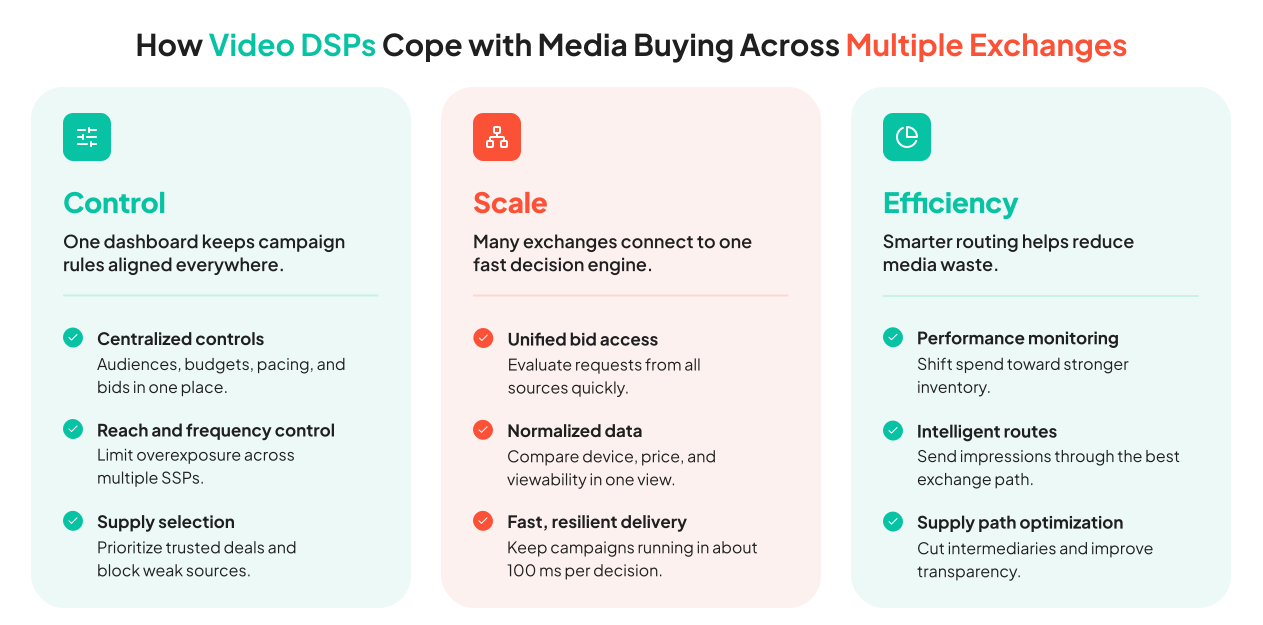
How Video DSPs Cope with Media Buying Across Multiple Exchanges

A video DSP acts like a central brain for your cross-channel ad campaigns. It gives control over targeting and brand rules, scale to reach audiences across dozens of sources, and efficiency that eliminates redundant bids.

Control

A video DSP equips you with every buy-side lever needed to oversee your campaigns:

  1. First, you get a centralized control panel. From the DSP UI, advertisers can configure audiences, pacing, budgets, and bidding rules that apply regardless of which exchange the impression originated from.
  2. Second, you can cross-manage reach and frequency. Even if the same audiences come from different SSPs, cross‑exchange frequency capping and reach measurement help avoid over‑exposure.
  3. Last, it is easy to select partners and deal types. You can prioritize direct or verified sellers, use PMPs or PG deals to secure high-quality inventory, and block supply sources that don’t meet transparency or performance standards.

Scale

You can plug in many pipes to one place and never lose the accuracy of your campaigns and strategies, due to:

  • Unified access to all programmatic bid requests, which the video DSP evaluates in milliseconds and decides instantly whether and how much to bid.
  • Normalized data across sources, including device type, placement, supply ID, price, and viewability in a single view.
  • Continuous ad delivery, even if one exchange or SSP slows down or goes offline.
  • High-QPS bid processing, with the DSP making decisions in around 100 milliseconds based on your rules and predictions.

Efficiency

A video DSP helps cut waste and optimize spend thanks to:

  • Ongoing performance monitoring, which helps avoid low-value ad inventory and prioritize premium placements.
  • Intelligent bid routes, directing each impression to the most effective exchange or deal and preventing duplications.
  • Continuous supply path optimization (SPO), helping reduce unnecessary intermediaries, improve transparency, and increase media efficiency.
Learn How Video DSPs Cope with Media Buying Across Multiple Exchanges

How Video DSPs Keep Campaigns Precise, Safe, and Compliant

At first glance, running video advertising campaigns looks easy. You need to continuously show ads to viewers and measure results. Yet the challenges emerge fast. Are those viewers the right audience? Are your ads running next to content your brand would actually approve?

A video DSP helps answer those questions before the programmatic ad campaign even starts. It uses audience data to guide targeting, applies filters to protect brand reputation, and enforces the rules governing modern advertising. As a result, video campaigns reach the right users while remaining safe and compliant.

How does a DSP use data to reach the right audience?

A video DSP reaches the right audience by combining multiple signals. You can upload CRM segments, activate website pixel data, and build lookalike audiences based on your existing customers. The platform then adds contextual signals such as device type, location, content category, and viewing behavior. Contextual targeting is becoming increasingly important in privacy-first environments where user-level identifiers are limited.

How does a video DSP protect against unsafe placements?

A video DSP filters inventory and traffic sources before placing bids. You can block sensitive categories, exclude risky domains or apps, and approve only trusted publishers. Many platforms integrate verification partners that analyze page content and detect suspicious traffic patterns.

How does a DSP ensure compliance with privacy regulations?

Trusted DSP solutions for targeted video ads apply privacy regulations, platform policies, and data restrictions automatically. They control how personal data is used, respect consent signals, and enforce policies required by environments like YouTube, mobile apps, and connected TV.

White‑Label or Custom Video DSPs: Which to Choose?

Choosing between a white-label video DSP and a custom-built solution comes down to your goals, resources, and growth plans:

  • White-label products will help you launch a branded DSP with standard features and integrations.
  • Custom video DSP reflects your exact needs. You own the technology stack, can evolve it over time, and differentiate your offering. A minimum viable product (MVP) approach lets you go live early and enhance features as you grow.

Here’s a quick breakdown of the core differences:

FactorWhite-Label Video DSPCustom Video DSP
CustomizationUI branding, deal settings, basic targeting rulesComplete customization to unique needs
OwnershipNo IP ownership100% IP ownership
ScalabilityLimited to vendor infrastructureEasily grows to enterprise volumes
FeesRecurring, up to $100k+ per yearNo fees
DifferentiationLow (standard features for video ads)High (proprietary algorithms and data)
Time to revenue1-3 months (rebranding)3-6 months (MVP → production)
Takeaway: Let your business goals guide the decision. Choose white-label to launch quickly and rely on proven tools, or go custom to build a platform that grows with your vision.
Unsure whether a white-label or custom video DSP is the right fit for your business?

Schedule a free strategy call with our team. We’ll help define the best approach based on your goals, scale, and growth plans.

Final Word

A video DSP has become a critical component for advertisers running programmatic campaigns in video-first environments. If you plan to use a solution, start by checking if it covers the most important destinations like YouTube, streaming services, and CTV apps. Next, verify the solution’s potential to deliver control, scalability, and productivity gains. It is also crucial to understand the importance of built-in compliance, targeting accuracy, and smart data usage.

Finally, consider whether a ready-made DSP meets your needs or if a custom solution is the better route. If building your own is on the roadmap, Geomotiv can help. We create custom video DSPs with only the features, standards, and integrations you need. You will get a flexible platform that grows with your business and becomes a true strategic asset.

Need Help? We’ve Got You Covered!

What is the difference between a video SSP and DSP?

When choosing between a video SSP or DSP, your role in the programmatic chain determines the decision. Video SSPs help publishers sell ad space, while video DSPs help advertisers buy and optimize video inventory.

Video SSPs aggregate and package a publisher’s ad slots, exposing them to multiple buyers. Video DSPs, on the other hand, evaluate millions of bid requests across publishers, applying targeting rules, budgets, and optimization to place the most valuable ads.

How long does it take to launch a custom video DSP?

Geomotiv can deliver a custom DSP in 3-6 months, starting with an MVP version. You get working software with core functions, test the solution in live traffic, and start earning revenue early. After the MVP release, we continue enhancing the software based on your priorities, adding only the features and integrations supporting your growth objectives.

Recommended Reading

Let Us Contact You

Fill out the form below and we’ll get in touch within 24 hours

    contact us2
    Software development expertise and senior tech talent for AdTech and Streaming Media projects.