Reliable and productive AdTech solutions ensure reaching business goals faster and more efficiently for AdTech companies, digital agencies, publishers, and brands.
Our retail media services help brands and retailers boost revenue through data-driven advertising. We specialize in programmatic ads, audience targeting, and AI-powered analytics, enabling personalized, high-impact campaigns. With expertise in retail media networks, ad monetization, and omnichannel strategies, Geomotiv maximizes customer engagement and sales.
Our experienced team of developers, fresh off successful projects with Pluto TV and Paramount, is ready to elevate your next Adtech or Video Streaming solution.
Geomotiv partners with leading companies across streaming, media, gaming, audio, CTV, retail, and RMNs to build custom AdTech solutions aligned with their business goals.
Geomotiv lets you access an ideal dedicated development team whenever you need to complete your in-house team or create a standalone R&D department within your company.
From a small app to a comprehensive platform-level project, Geomotiv can develop and implement custom software solutions that involve extensive Big Data usage, storage, management, and processing.
We will help you to drive your business growth with innovative AI and ML services by automating routine processes, expanding your app features, and increasing the accuracy of business predictions.
At Geomotiv, we specialize in delivering innovative solutions that drive sustainable growth and success for your business. Let us help you transform your vision!
Get In Touch
USA (Headquarter)
700 N. Fairfax suite 614, Alexandria VA, 22314 United States
Europe
Rua Viriato 27-3A, 1050-234 Lisbon, Portugal
Western Asia
14 Paronyan St., Bln. 6, 0009 Yerevan, Armenia
Middle East
Al Marsa Street Marina Plaza, Level 27 Dubai, United Arab Emirates
The AdTech ecosystem grows increasingly complex, with all market participants searching for the right balance between optimal ad revenue and quality, transparency, and control of the ad-selling activity. They explore a number of options on that path, such as ad exchanges and supply-side platforms (SSPs), each with specific strengths and weaknesses for their users.
Both ad exchanges and SSPs bridge publishers monetizing their ad space and advertisers wishing to reach their target audiences. However, each platform type comes with distinct functions and roles within the digital ecosystem.
Here is a detailed overview of SSP vs ad exchange issues you should keep in mind when choosing which platform to go with. This article defines both resources, clarifies their functional peculiarities, and provides a practical framework for publisher decision-making.
Understanding Ad Exchanges and SSPs: Core Definitions
When we talk about an ad exchange, we mean a digital marketplace that handles purchases and sales of ad impressions via the real-time bidding (RTB) mechanism. As a rule, it operates as a neutral infrastructure bridging supply-side and demand-side platforms (SSPs and DSPs), enabling ad-related transactions.
Most ad exchanges work using auction logic of some kind. Open auctions operate as default, fully open bidding environments where any qualified ad space buyer can place bids for available ad impressions of publishers. Private actions make the bidding eligibility mechanism selective, meaning that only invited buyers can place their bids.
As a rule, it involves the generation of a Deal ID for a group of selected advertisers, giving publishers greater control over the ad content published on their resources. Another option is the preferred deal, or unreserved fixed rate deal, in which ad space buyers receive the first-look access privilege based on their one-on-one agreements with the publisher. Under this arrangement, buyers can view available ad space before it enters an open or private auction, making a choice of buying it at a predetermined CPM rate or declining it.
Some ad exchanges also follow a fully programmatic arrangement with their participants, with buyers getting a programmatic guaranteed (PG) volume of ad impressions at a fixed rate, delivered to them via sophisticated matching algorithms of the exchange platform. In any of these ad trading options, the ultimate goal of an ad exchange is to facilitate fair competition among ad buyers while matching supply with demand.
The supply-side platform (SSP), in its turn, is more focused on the delivery of a customizable ad inventory management experience to publishers. An SSP is a programmatic technology platform that provides user-friendly inventory management dashboards to configure and control the process of ad space selling, price setting, and ad content filtering.
SSPs typically connect to multiple DSPs and ad exchanges to guarantee better filling, favorable CPM rates, and greater competition. Their main distinction is an advanced toolkit for yield optimization, pricing control, and inventory segmentation, which ensures greater transparency of ad space allocation to bidders to guarantee brand safety. Modern SSPs also come with advanced reporting and analytics that help publishers keep their fingers on the pulse of ad-selling activities across resources.
Key Functional Differences: Ad Exchange vs SSP for Publishers
While both SSPs and ad exchanges help publishers sell their available ad space and buyers get the ad impressions needed, they represent distinct elements of a digital marketing ecosystem.
SSPs send bid requests to multiple DSPs to which they are linked, including but not limited to ad exchanges. Exchanges that receive bid requests typically distribute them to other DSPs, returning winning bids to SSPs to deliver the ad impression. This way, SSPs can be described as the publisher’s management platform, while ad exchanges are responsible for the transaction layer of ad impression trading.
Here are the main functional distinctions between ad exchanges and SSPs that a publisher should know.
Ad Exchange
SSP
Purpose
Neutral, efficient intermediary between demand and supply sources in the ad-selling industry
Monetization management and optimization for publishers
Control
Minimal control for publishers; ad space is sold using auctions
Granular controls of all aspects of ad space selling, from price floor setting to inventory categorization and buyer filtering
Optimization
Routing and bidding optimization is available. No inventory-related optimization
Ad exchanges can have various numbers of DSPs and SSPs linked to their platforms
Many ad exchanges and DSPs are connected to SSPs for better fill rates achieved with higher bid competition
Revenue and Cost Analysis: Which Platform Maximizes Publisher Earnings?
When choosing SSP vs ad exchange, publishers should also take the financial aspect into account. Each of these platforms is geared towards bringing revenue to publishers and giving the best ad impression outcomes for buyers.
SSPs earn money by charging a revenue share from sold or bought ad space or tech fees; yet, they may require extensive technical maintenance. Ad exchanges come with lower overheads, but their optimization tools for users are also scarce, with such platforms focusing primarily on the transactional aspect of ad sales. These considerations make it more financially viable for small and mid-sized publishers to use SSP-driven optimization, while large publishers can link to ad exchanges directly for better cost-effectiveness.
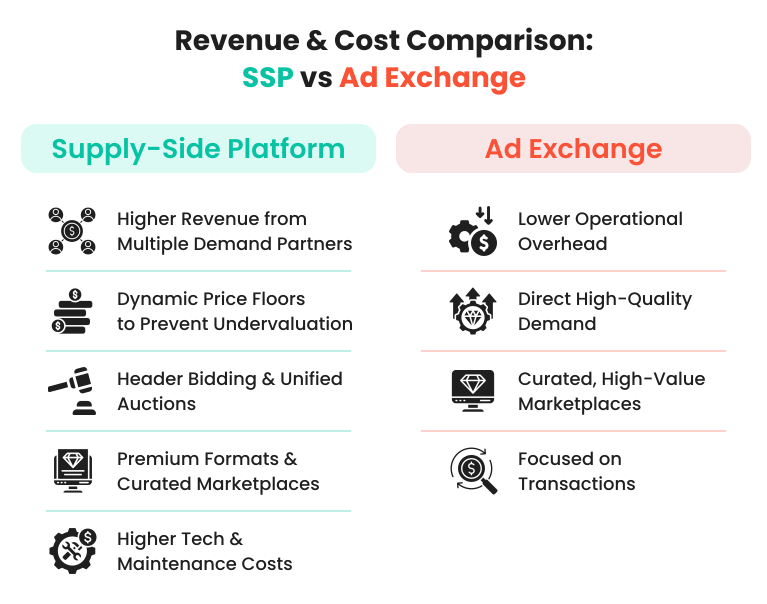
Here’s how each of them manages these targets. SSPs drive higher revenue for publishers with the help of:
Maximizing competition for each ad impression by linking to multiple demand partners and exchanges. Each bid request is released to numerous contenders simultaneously, with the RTB algorithm determining the winner. This way, SSPs maximize ad space filling and ensure optimal ad performance.
Reducing the risk of undervaluation with the help of dynamic price floor setting.
Implementing header bidding and unified auctions to ensure yield optimization. These bidding algorithms have proven more efficient compared to the conventional waterfall setup, thus giving all SSP participants an optimal experience.
Raising average CPM rates with premium bidding formats and advanced marketplace curation features.
The main features of ad exchanges that ensure their steady performance and financial gains for participants include:
Attracting large-scale publishers with massive ad impression volumes to satisfy the ad buying needs of their clients.
Ensuring direct access to high-quality demand sources for publishers to attract reputable publishers with lots of ad space supply.
Provision of specialized, high-value demand via curated marketplaces.
Enabling simpler ad space trading with more straightforward architectural solutions and a small number of intermediaries involved.
Publisher Control and Flexibility: Managing Your Inventory
When choosing a programmatic platform type for ad selling, most publishers are concerned about the issues of control and flexibility. Control enhancement is definitely the pro of using SSPs for ad space selling; these platforms enable granular controls over price and floor management, with settings ranging from eligible devices to formats and geolocations. SSPs also do a good job creating private marketplaces and preferred deals for the premium segment of publishers and ad buyers. These features guarantee brand safety and content quality, with continuous compliance and privacy controls ensuring security and risk management.
Ad exchanges lack control and flexibility parameters, as most of these platforms offer a limited set of inventory management options. As a rule, publishers have no control over buyer or format prioritization; nor can they segment the ad inventory and configure settings for each category. Most ad exchanges also lack unified reporting tools to give publishers data-backed insights into the performance of various demand sources.
If you’re a publisher considering SSPs and ad exchanges, these nuances shouldn’t dissuade you from using exchanges as one of the demand sources for ad space selling. Experts advise on the hybrid approach as the best option for reaping the benefits of SSPs and leveraging the functional superiority of exchange platforms. Using a variety of demand sources, publishers can take advantage of both control and bidder competition, thus establishing strategic relationships with diverse buyer categories.
Choosing the Right Platform: Decision Framework for Publishers
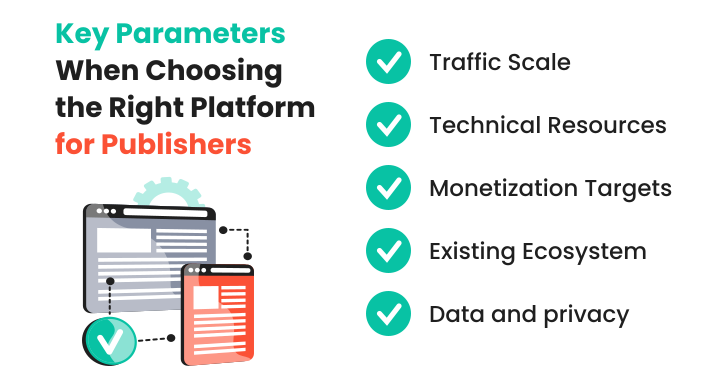
Answering the SSP vs ad exchange question is not that easy, as both variants have pros and cons. Thus, your final choice should depend on your project’s individual characteristics and needs. Here are the main parameters to include in your checklist.
Traffic Scale
The first point to consider is the volume of ad space you’re planning to sell on a monthly basis.
High-volume publishers that have millions of vacant ad spots for sale, such as large media companies or high-traffic news websites, can benefit from the operational simplicity and effectiveness of ad exchanges. They get direct access to strong demand and leverage an economy of scale while benefiting from a simpler operational environment.
Mid-sized and small publishers with lower ad space volumes can generate greater advantage from programmatic SSP optimization, which gives them access to stable aggregated demand, enhanced fill rates, and protection of pricing floors.
Technical Resources
When setting up programmatic ad software, publishers should keep in mind that SSPs demand operational and technical oversight. Thus, the price a publisher pays for strong control and optimization is continuous resource investment.
When launching SSPs or partnering with existing platforms, publishers need to manage integration overhead, optimize yield, coordinate multiple partners, and keep track of policy and compliance issues.
Ad exchanges, in turn, enable simple, low-maintenance monetization capacity with automated demand sourcing and fewer integrations needed. That’s why SSPs are way more suitable for publishers with in-house tech teams or partnering agencies that manage their SSP software.
Monetization Targets
Naturally, all publishers strive for revenue maximization, which is possible with programmatic SSP-based monetization and header bidding strategies. It also makes sense to link to multiple SSPs and ad exchanges to increase demand or launch one’s in-house SSP for direct partnerships with DSPs and margin improvement.
However, maximizing profit is not always a top priority; at least, it doesn’t prevail over other development targets for companies that look for simplicity. Some publishers are ready to forgo a portion of potential revenue for the sake of setting up a simple, streamlined workflow that requires minimal interference. This way, publishers save time on auction optimization or troubleshooting and sometimes end up with greater final profit than those who spend a portion of their revenue on SSP customization and maintenance.
Existing Ecosystem
Setting up a new SSP or shifting from an already used solution may be costlier and more cumbersome than remaining with what the publisher has. For instance, many publishers already use Google Ad Manager and Google Ad Exchange, which is a fully integrated ecosystem with numerous advantages. Thus, companies that rely on Google traffic for most of their ad sales and have limited tech resources for an extensive infrastructural change may find it more suitable not to change anything.
Independent publishers or those wishing to get rid of single-platform dependency are sure to reap significant benefits from their transition to a multi-SSP programmatic setup or creating their branded SSP. First, they are sure to generate more revenue from boosted demand and competition for their ad space. Second, they eliminate single-point dependency and unlock unlimited revenue diversification channels. Third, they enable advanced monetization strategies with per-partner price floor customization, new demand source testing, and better ad matching to target audiences.
Data and Privacy
The era of third-party cookie usage is gone, and publishers need first-party data about user behavior, category interests, and contextual analysis to make vital decisions.
SSPs can deliver those data insights by means of leveraging ad impression performance data and delivering it in the form of intuitive analytical reports. Privacy compliance is also the strong side of modern SSPs, which ensure ongoing GDPR, CCPA, and TCF v2.2 compliance and efficient restricted data flow handling. This way, publishers that launch or use compliant SSPs avoid regulatory penalties and preserve user trust via efficient reputational risk management.
Looking for a winning solution to monetize your ad space?
Geomotiv can create a feature-rich, flexible, and operationally efficient SSP uniquely tailored to your needs. Book a consultation today to ensure stable revenue streams from your ad impressions.
Conclusion
Choosing between an SSP vs ad exchange is not straightforward. SSPs generally offer a more client-centric approach, with deeper optimization and greater control over ad-selling activities, while ad exchanges provide a simpler and more operationally efficient marketplace. There is no one-size-fits-all solution, factors such as traffic scale and available technical resources often become decisive in selecting the right platform type.
While SSPs tend to deliver higher revenue potential and more flexibility for many publishers, ad exchanges remain the preferred method for high-volume publishers or those selling highly specialized inventory. Hybrid setups can also be effective across a range of publisher categories. Ultimately, experimentation and continuous performance analysis are key to ensuring consistent ad-impression monetization.
FAQs
Need Help? We’ve Got You Covered!
What are the key benefits of SSPs for publishers?
The SSP programmatic software helps publishers retain full control over their ad inventory and ad space selling operations. SSPs give publishers a feature-rich control room with package inventory, price floor setting functions, and format-specific inventory controls for better brand reputation and ad quality maintenance.
What SSPs are the most popular among publishers?
The best-known international SSPs include Magnite, Index Exchange, and OpenX. Publishers also recommend Microsoft Monetize and PubMatic platforms. Other trending names include Adform, Teads, and Vistar Media. Many other platforms emerge every day to diversify the SSP market and attract publishers and ad buyers with exclusive features and service perks.
What role do ad exchanges play in the SSP/DSP system?
Ad exchanges are responsible for the transaction part of the programmatic advertising sector. While SSPs represent the supply side, and DSPs represent the demand side, ad exchanges make the ad sales transactions happen. This way, all these elements form a symbolic relationship that boosts the efficiency and optimization of the advertising process.
What are the first-price and second-price auction mechanics?
Previously, SSPs used to allocate ad space using the second-price auction, which presupposed paying $0.01 over the second-highest bid. Yet, the introduction of header bidding and unified auction mechanics has made this approach inefficient. Today, the new standard is the first-price auction, presupposing that the ad space is allocated to the highest bidder who pays the actual bid they’ve placed. This way, SSPs have achieved greater bidding transparency and higher CPM for publishers.
How does header bidding work at SSPs?
Header bidding is a new auction layer that allows SSPs to boost CPMs and eliminate the waterfall bidding method. It allows all SSPs to bid for an ad impression at the same time, with the winning bid allocated before the final line item’s selection on the internal ad server.
What key parameters help publishers choose between SSPs and ad exchanges?
When choosing between SSPs and ad exchanges, publishers should evaluate their traffic scale first, opting for ad exchange or hybrid models for high-volume ad sales. The availability of technical resources also plays an important role, with SSPs offering advanced features but requiring greater tech expertise and maintenance. Monetization potential is higher with SSPs, but ad exchanges offer the operational simplicity that some publishers may prioritize. Finally, the choice of an SSP versus an ad exchange should be made with the existing ecosystem in mind.
Fill out the form below and we’ll get in touch within 24 hours
Software development expertise and senior tech talent for AdTech and Streaming Media projects.
Contact Us
Fill in the form
Thank you! We'll get in touch very soon.
Also you can book a call with our senior manager
We will be glad to see in our team!
Fill in the form
Thank you! We'll get in touch very soon.
Also you can book a call with our senior manager
Get a Free Consultation
Looking to build a successful custom software solution? Our experienced development team is ready to assist.
Thank you! We'll get in touch very soon.
Also you can book a call with our senior manager
Cookie Consent
We as well as our partners use cookies to enhance your browsing experience, analyze site traffic, and personalize content. For more details, see our Cookie Policy.
FunctionalAlways active
The technical storage or access is strictly necessary for the legitimate purpose of enabling the use of a specific service explicitly requested by the subscriber or user, or for the sole purpose of carrying out the transmission of a communication over an electronic communications network.
Preferences
The technical storage or access is necessary for the legitimate purpose of storing preferences that are not requested by the subscriber or user.
Statistics
The technical storage or access that is used exclusively for statistical purposes.The technical storage or access that is used exclusively for anonymous statistical purposes. Without a subpoena, voluntary compliance on the part of your Internet Service Provider, or additional records from a third party, information stored or retrieved for this purpose alone cannot usually be used to identify you.
Marketing
The technical storage or access is required to create user profiles to send advertising, or to track the user on a website or across several websites for similar marketing purposes.