What’s the Software Engineer Hourly Rate in the USA?

Software engineer rates
Table Of Contents:
Categories:

As of 2026, the average hourly rate for hiring in-house mid-to-senior level software engineers in the USA typically ranges from $85 to $110, with specialized AI and Cloud architects typically charging $100+ per hour. Entry-level positions usually begin lower, around $55–$70 per hour. These numbers reflect what companies really pay per hire. Not just salary, but everything that comes with employing an engineer.

And this price tag continues to climb, as major tech companies, startups, and AI labs raise compensation benchmarks to land the best talent.

For instance, according to Levers.fyi data, industry leaders like Meta pay a median total compensation of over $218 per hour, while software engineers at OpenAI earn a median of approximately $267 per hour. *Note: These figures represent gross total compensation (including base salary, bonuses, and stock). For a business, the true cost of employment, which includes payroll taxes, insurance, and benefits, is typically 15–30+% higher than these hourly rates.

But is the Silicon Valley tax the only driver, or do you also need to overpay for other factors? To help you navigate the costs, let’s break down what drives US software developer rates per hour to record highs and explore exactly what is hidden in that hourly invoice.

What Drives Software Developer Rates in USA

Competitive salaries and attractive offers aren’t the only factors challenging employers to pay a premium software developer hourly rate. Here’s what else makes hiring more expensive:

  • Senior talent scarcity. A limited supply of experienced engineers is one of the main reasons rates stay high. While there are many entry-level candidates, companies are competing for a much smaller group of senior developers who can deliver in production environments. Demand is especially strong for US-based engineers with AI expertise. According to the Reveal survey, around 70% of organizations prioritize senior-level talent, while only 12% plan to focus on entry-level hires.
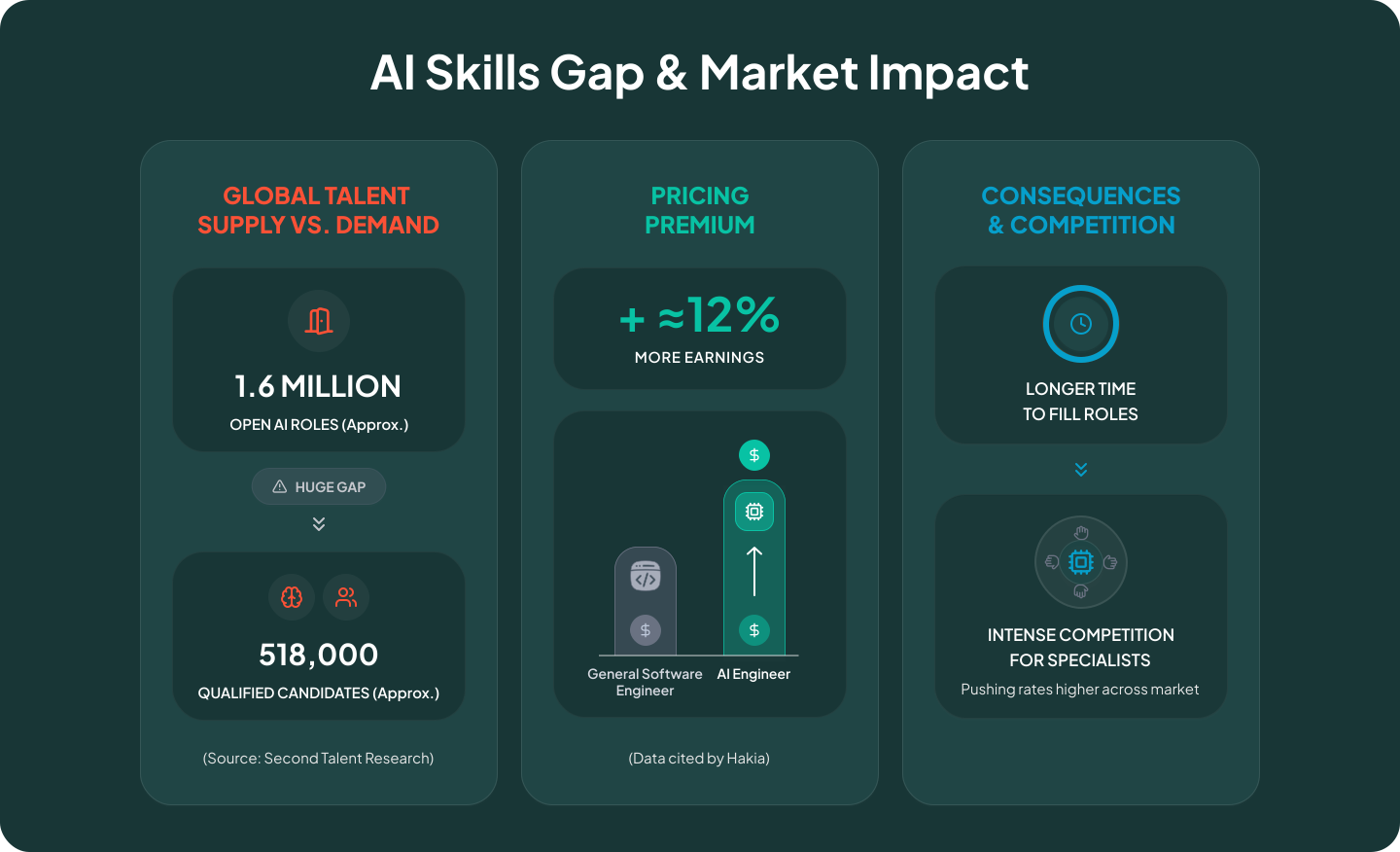
  • AI skills gap. A shortage of qualified AI talent is pushing rates higher across the market. Globally, there are around 1.6 million open AI roles and only about 518,000 qualified candidates, according to Second Talent Research. This gap means roles take longer to fill, and companies often compete for the same small pool of specialists. AI expertise also comes with a clear pricing premium. Data cited by Robert Half’s 2026 Salary Guide shows that AI engineers earn about 20% more than general software engineers in comparable roles.
  • High living costs. Even with remote work setups, innovation hubs like San Francisco, New York, and Seattle influence software developer rates across the US. The high cost of living in these areas, especially housing and local taxes, raises the baseline salary engineers expect. For example, software developer salaries in California are about 28% higher than the US average, based on data aggregated by O*NET.
  • Extended hiring cycles. The average time-to-hire for software engineers now extends to approximately 35–52 days in 2026, with senior and specialized roles such as AI/ML engineers taking up to 89 days, according to industry data. Slow hiring cycles mean top candidates accept other offers before you’re ready to make one. At the same time, offer acceptance rates are down to 51%, as noted by Daily Dev findings. They also found that top-tier talent is typically snatched up by faster competitors within 10 days. This puts pressure on employers to offer higher rates to secure talent before others do.
  • Additional market pressures. A few other factors also affect developer rates, though to a lesser extent. Some companies move early to secure future talent, offering high-paying internships to lock in candidates before they graduate. In sectors like finance, firms offer interns compensation of up to $20,000 per month to encourage them to return full-time. At the same time, demand for developers has spread beyond traditional tech companies. Industries like finance, healthcare, and retail now compete for the same talent pool, further pressuring rates across the market.
AI Skills Gap & Market Impact image

US-based companies are actively considering specialists from abroad to address these challenges. There are alternatives to hiring in-house due to the gradually erasing geographical boundaries and the popularity of the remote work format.

Many companies opt for expert development teams to create full-fledged tech solutions to compete in the market instead of hiring in-house.

Want to hire experienced software developers without overpaying?

Choose from 40,000+ pre-vetted candidates across 180+ locations – available at competitive rates. Save on hiring costs and get top professionals ready to join your IT project in less than two weeks.

However, some US-based businesses choose to remain on the safe side and hire internally. Yet, the size of the software engineer contractor’s hourly rate can raise eyebrows among potential customers. Many of them wonder if the enormous bills of US-based companies are justified. To get a clear picture, it is necessary to consider additional factors.

What’s Included in the Software Developer’s Rate?

The average hourly rate for software developer includes several items of the company’s hiring and employing a specialist. We’ve fetched and analyzed the US Bureau of Labor Statistics data to estimate the particular ones.

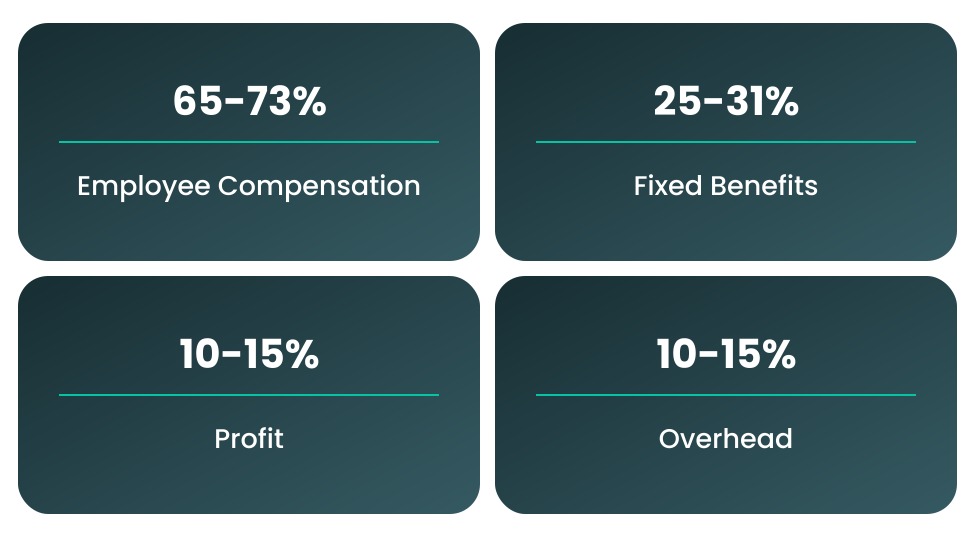
Here’s what the allocation of costs looks like:

Software Developer's Rate Composition
Software Engineers Rate

Now, let’s consider what is included in each of the cost items:

Employee compensation: the main part of expenditures, which accounts for 65-73% of the budget.

Fixed benefits (25-31%): additional costs that a company has to cover. Some basic ones include:

  • Legally required benefits (social security, medicare, unemployment insurance);
  • Health insurance (disability, dental, life);
  • Paid time off;
  • Retirement savings;
  • Annual bonus;
  • Supplemental pay (overtime and premium);
  • Employment training tax.

It is also necessary to consider overhead costs (10-15%) associated with the company’s day-to-day operations:

  • Rent and utilities;
  • Employee perks: provided lunch, corporate events, coaching, etc.;
  • Office supplies: furniture, electronics, and technical supplies, etc.;
  • Time on bench and research projects.

Company’s profit (10-15%) is one of the company’s core investment sources.

Now let’s look at what’s the hourly rate for a software developer in the USA.

What Rates are at Software Companies in the USA?

To set a realistic baseline for hiring costs in the US, we combined data from leading salary aggregator platforms, including Indeed, Payscale, and Built In. This gives a reliable view of the current base hourly pay for software developers.

However, the numbers in this guide go beyond base salaries. They reflect the total approximate cost to the employer, not just what the developer earns. We included an additional 30% that cover hidden costs, such as payroll taxes, health insurance, etc.

Based on this approach, the average fully loaded cost of an in-house software engineer in the US is about $85-110 per hour. This is the typical cost range companies plan around for US-based hiring.

For a comprehensive overview, let’s see how the figure changes across seniority level, specialization, and location.

Seniority level

Seniority reflects the level of experience in the given role, which directly affects the hourly rate for software developer. Junior developers are the most affordable category, but they need more detailed onboarding and support from team leads. Mid-level engineers offer a balance of cost-per-hire and independence. Senior developers charge the highest rates, as they handle complex tasks and work with minimal oversight.

Here’s how total employer spend typically scales across seniority levels:

  • Junior developers earn approximately $55-75 per hour.
  • Mid level software developer hourly rate stands between $80 and 110 per hour on average.
  • Senior software developer hourly rate is often in the range of $105-135 per hour.

Hourly rates at elite tech companies can exceed these figures significantly. Top product companies and high-growth startups often pay above these market averages, particularly for senior engineers, as their expertise has a direct impact on revenue.

Specialization

If you plan to hire software engineers specializing in AI, cybersecurity, and cloud architecture, be ready to factor in a premium over a general full stack developer hourly rate. Based on current 2026 benchmarks from Robert Half, Dice, and job offer data, here are the top-paying specializations in the USA:

SpecializationEntry-mid hourly rateSenior hourly rate
LLM engineer$130-175$210+
Cloud architect$110$190-220
ML engineer$115$175+
Cybersecurity$105$185+
Blockhain$99$170+
*Note: The figures in this table reflect contractor and freelance market rates as of 2026. These represent the total billable cost to your business.

Location

Software engineer hourly rates are highly sensitive to location. A senior specialist in Silicon Valley will average 20-30% more in base pay than the same role in a mid-tier city like Charlotte or Phoenix. The strongest pay levels are seen in the following states:

  • California – $101/hour.
  • Washington – $100/hour.
  • New York – $95/hour.
  • Massachusetts – $91/hour.
  • Maryland – $87/hour.

Alternative Ways to Save on Software Developer Hourly Rate in the US

When you are ready to engage experts in a remote format, try seeking specialists from other countries. Outsourcing and offshoring, for example, expand the field of engaging potential employees – they can be hired from any region or country.

Different reports confirm the projected growth of outsourced projects in the coming years. In particular, Mordor Intelligence projects a significant increase in the global IT outsourcing market volume by 2031. It reached $618 billion in 2025 and is expected to grow at a CAGR of 3.3% through 2031. The report anticipates it will hit $752 billion by 2031.

One of the key drivers of outsourcing is reducing project costs. This point fuels market growth most of all for software companies in the USA.

Given the growing number of US-based businesses hiring remotely, many companies are looking for ways to optimize and reduce project costs. As a considerable part of the budget covers a senior software engineer contractor hourly rate, companies are looking to save on these payments.

To get a sense of what rates are like in popular remote-hiring destinations today, we analyzed data to see what companies pay employees in key tech roles.

Software Development Rates by Country

Canada

The Government of Canada invests heavily in post-secondary STEM programs and encourages students to pursue centers of excellence in their education. A steady flow of new tech talent enters the global workforce each year.

Canada offers vast opportunities to engage top talent at a cheaper cost while remaining within the continental US time zone. Businesses can expect to pay an hourly rate of $50 to $70.

LATAM countries

Grand View Research predicts that the LATAM IT services market will generate $112+ billion by 2030, for good reason. Many experts expect this region to increase business spending on software development projects. Most Latin American countries operate within a 0–3-hour time difference, which allows real-time collaboration without the delays of other offshore models. The talent pool is large and mature, while labor costs are typically 30-60% lower than in the US.

Argentina, Brazil, and Mexico are the most popular countries to outsource software development and find affordable software engineer contractor hourly rates. Here’s a glance at average rates in each country:

BrazilArgentinaMexico
$30-55$25-35$30-50

Western European countries

As US software developer hourly rate can make a company go bust​, many companies hunt for more reasonable rates in the Western European region. Countries like Germany or France generally have a high standard of living, soaring taxes, and large economies. It results in high compensations, which, however, turn out to be lower than in the US:

GermanyFranceThe Netherlands
$60-85$60-80$65-85

Eastern European countries

High-quality education, excellent English skills, and cultural similarity to Western Europe make the Eastern European region a popular destination for outsourced projects. Moderate industry-standard software engineer hourly rate accompanies these benefits and boosts the demand for specialists in this region. The rates, though, vary by country:

The Czech RepublicRomaniaPoland
$45-65$50-75$55-75

Countries in the Caucasus Region

The region is a popular destination for hiring software developer contractors. Governments in the Caucasus share the goal to become digital hubs by lowering taxes and easing restrictions to set up local entities. This makes it easier for international companies to hire locally. The talent pool benefits from a strong background in mathematics and physics, which supports solid engineering skills. Hiring mid- to senior-level developers is more affordable than in the US, though the region is not positioned as a low-cost market.

GeorgiaArmeniaAzerbaijan
$30-55$35-65$25-45

Asian countries

Asia is one of the largest regions for sourcing software engineers. Countries like India, China, and Vietnam offer extensive talent pools, making it easier to grow teams quickly as needs increase. Time zone differences with the US also allow work to continue outside standard business hours, which helps speed up delivery cycles. At the same time, many Asian tech hubs have built strong capabilities in AI, cloud, and FinTech, meaning you can outsource advanced engineering work.

IndiaVietnamThe Philippines
$20-45$25-45$20-40

As you must have noticed, each location’s average hourly rate varies. Let’s have a quick overview of how the US software developer rate compares to that of other countries:

CountryHourly rate range
USA$85-110
Canada$50-70
Brazil$30-55
Argentina$25-35
Mexico$30-50
France$60-80
Germany$60-85
The Czech Republic$45-65
Poland$55-75
Romania$50-75
Georgia$30-55
Armenia$35-65
Azerbaijan$25-45
India$20-45
Vietnam$25-45
The Philippines$20-40

Conclusion: Hire Smarter – Beyond US Hiring Rates

If you’re based in the United States and need to add tech talent to your in-house team, finding the right specialists at affordable rates may become quite daunting. Why not turn to a hybrid work model and look for additional resources to back up your in-house team?

A hybrid team is the answer to current employment challenges faced by the majority of companies. The best destinations for talent sourcing provide quick access to skilled developers and other specialists and let you save on extra payments by opting for IT staff augmentation and dedicated team services.

Geomotiv is a US-based software development company with distributed development teams across 180+ countries. With extensive expertise in setting up and managing hybrid development teams and a vast pool of diverse talent, we provide the most optimal quality-price ratio for prospective partners. Our software developers can perform the same amount of tasks with the same quality for just $30-60 per hour.

Want to hire experienced software engineers from Geomotiv?

Save on budget costs and access a talented, qualified workforce from our global hiring locations.

Our clients don’t have to worry about transparency issues and communication hurdles as well. We provide flexible cooperation conditions that target the specific needs of your business.

Get in touch to find out more about other perks of outsourcing to Geomotiv.

We've Got You Covered!

What is the hourly rate for a software engineer in Silicon Valley?

The average software developer’s hourly rate range in Silicon Valley is from $80 to $150. As home to top technology companies, the region holds a large share of developers paid above the national average. Therefore, an employer needs to be ready to pay competitive rates to hire a specialist.

What is the average hourly rate for a software engineer in New York?

The average software developer’s hourly rate in New York falls $95. The factors affecting the price tag include:

  • experience level,
  • skills and knowledge of specific technologies,
  • the company’s type and size.
How much do software engineers make an hour?

A software developer’s hourly rate is calculated based on the following factors:

  • Location;
  • Company type and size;
  • Skills;
  • Experience.

A junior software developer’s hourly rate is much lower than a senior SDE’s.

What is the hourly rate of a highly-skilled software developer?

Competent software developers are expected to earn up to $350-400/hour. A highly-skilled professional’s hourly compensation falls into a premium price tag category. A part-time software developer’s hourly rate of that kind is above industry standards.